Early Signs of a Clogged Fuel Filter: Diagnostic Tips for Mechanics and Fleet Managers
2026-08-06
Early Signs of a Clogged Fuel Filter: Diagnostic Tips for Mechanics and Fleet Managers
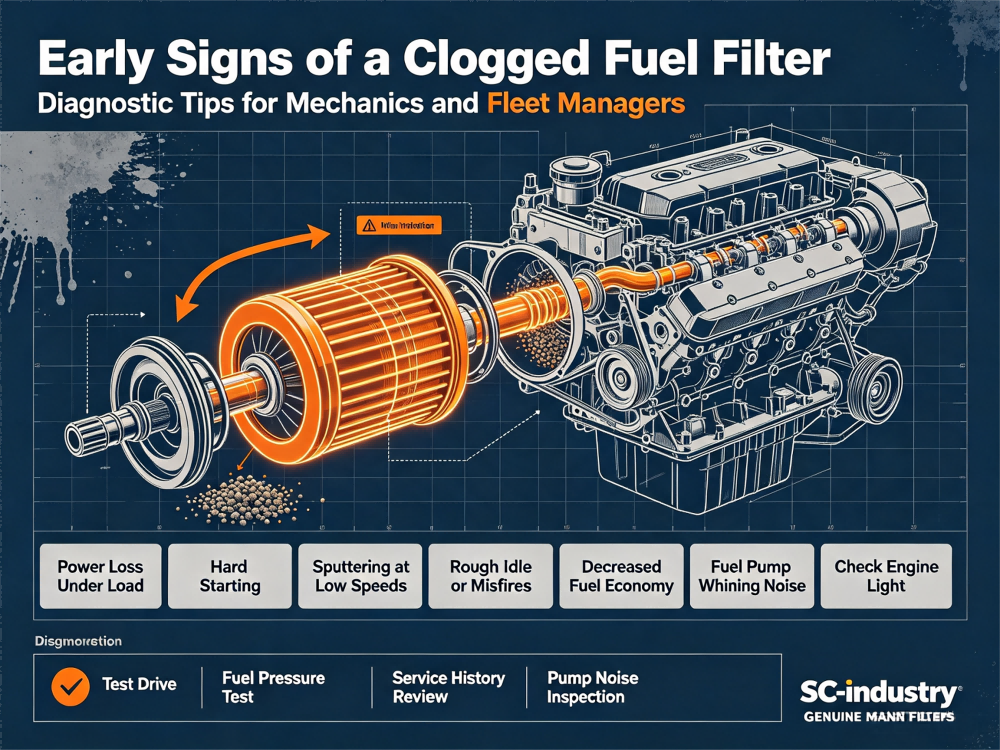
A diesel engine that hesitates, sputters, or refuses to start is often trying to tell you something. All too often, the culprit is a fuel filter that has reached the end of its service life. For mechanics and fleet managers, recognizing the early signs of a clogged fuel filter is the key to preventing costly downtime and major component failures.
The Critical Role of the Fuel Filter
The fuel filter acts as the last line of defense between your fuel tank and your engine. Its job is to trap dirt, rust, and debris before they can reach the sensitive components of the fuel injection system. In modern common rail diesel engines operating at pressures exceeding 30,000 psi, even microscopic particles can cause catastrophic wear.
When a fuel filter becomes clogged, it restricts fuel flow to the engine. This triggers a cascade of performance issues that, if ignored, lead to expensive repairs.
Typical Symptoms of a Clogged Fuel Filter
Here are the most common warning signs that a fuel filter needs attention:
1. Engine Power Loss Under Load
One of the clearest indicators of a restricted fuel filter is a noticeable loss of power when the engine is under load. The vehicle may feel fine around town or at idle, but when merging onto a highway, climbing a hill, or towing, it suddenly feels breathless or sluggish. This occurs because the clogged filter cannot deliver the increased fuel volume the engine demands during hard acceleration.
2. Hard Starting or No-Start Condition
A healthy diesel engine needs a steady flow of fuel to start. A clogged fuel filter can make the engine crank longer than usual before it fires. In cold weather, the problem may be even worse. If the filter is completely blocked, the engine may crank but fail to start altogether.
3. Engine Sputtering or Stalling at Low Speeds
Inconsistent fuel delivery often causes the engine to sputter or stumble while driving, especially at low speeds or when idling. You might notice the engine jerking or hesitating, and it may even stall when stopped at a red light or in traffic. This symptom indicates that the filter can't maintain the steady flow needed for stable idling.
4. Rough Idle or Engine Misfires
When fuel delivery is uneven, the engine can develop a rough idle or misfire. This feels like a bumpy vibration through the steering wheel or seat, often accompanied by an inconsistent engine note. In modern common rail diesel systems, inconsistent fuel delivery creates lean conditions that cause uneven RPM and misfires.
5. Decreased Fuel Economy
A clogged fuel filter can actually increase fuel consumption. The engine control unit compensates for low fuel pressure by enriching the fuel mixture, burning more fuel to maintain the same power output. While it may seem counterintuitive, restricted fuel flow often means you'll visit the fuel pump more often.
6. Whining Noise from the Fuel Pump
A fuel pump working against a blockage often becomes noticeably louder. If you hear a high-pitched whine from the fuel tank area, especially during the priming cycle when the ignition is turned on, the pump may be straining to push fuel through a clogged filter. Ignoring this symptom risks turning a filter replacement into a much more expensive pump replacement.
7. Check Engine Light Illuminates
Modern vehicles are equipped with sensors that detect fuel delivery problems. A clogged fuel filter can trigger a "P0171 System Too Lean" code or other fuel pressure-related codes that turn on the check engine light. Professional diagnostic tools can confirm whether low fuel pressure points to a filter issue.
The Chain Reaction of Neglect
A clogged fuel filter doesn't just reduce performance—it triggers a destructive chain reaction:
-
Fuel Pump Overheating: The pump works harder and runs hotter, shortening its lifespan
-
Injector Damage: Contaminants that bypass or are not captured by a substandard filter cause wear to precision injector nozzles, leading to injector failure
-
Complete System Failure: In extreme cases, the entire fuel injection system can be compromised
Diagnostic Checklist for Mechanics
Here is a simple checklist you can use to diagnose a suspected clogged fuel filter—and share with customers to demonstrate your service value:
|
Symptom
|
What to Check
|
|---|---|
|
Power loss under load
|
Test drive: does the engine hesitate on hills or during overtaking?
|
|
Hard starting
|
Measure cranking time and fuel pressure during start-up
|
|
Sputtering/stalling
|
Check behavior at idle and low-speed operation
|
|
Pump noise
|
Listen for whining from the fuel tank area
|
|
Service history
|
Verify when the fuel filter was last replaced (recommended 20,000-40,000 miles)
|
|
Fuel pressure test
|
Use a gauge to confirm pressure drops under load
|
Why Regular Replacement with a Quality Filter Matters
The true cost of neglect becomes clear when you compare the price of a premium filter against the expense of injector replacement. In modern common rail diesel systems, injector failure can cost $3,000 to $8,000 to repair. Using a high-quality fuel filter element is inexpensive preventive maintenance that protects against these catastrophic failures.
Why SC-industry is Your Partner for Genuine Mann Filters
At SC-industry, we are a dedicated supplier of genuine Mann diesel fuel filter products. Our robust supply chain management ensures that every Mann diesel fuel filter we deliver meets original equipment quality standards. We are not a manufacturer; we are a specialized distributor with the capabilities to supply genuine Mann fuel filter elements for fleets and workshops worldwide.
By choosing SC-industry as your partner, you invest in long-term engine protection and lower total cost of ownership. Our Mann fuel filter for fleet applications are trusted by professionals who understand that preventive maintenance is the smartest investment.
Spark Plug Torque Specs Guide: Why Correct Installation Torque Matters for Engine Performance
Why Diesel Engines Need a High-Quality Fuel Filter: A Guide for Fleet and Workshop Buyers