HOME /NEWS & BLOGS /Latest Blogs /Toyota Fender Replacement Tips for Common Models (Camry, RAV4, Hilux) /
Toyota Fender Replacement Tips for Common Models (Camry, RAV4, Hilux)
2026-05-19
As a Toyota owner, a damaged fender can be a frustrating issue—whether from a minor collision, road debris, or corrosion.
The fender (also known as a wing) is more than just a cosmetic part; it protects your wheel well, engine compartment, and passengers from water, mud, and stonesGenuine Toyota Parts and Accessories.
For Toyota’s most popular models—Camry, RAV4, and Hilux—a proper fender replacement ensures safety, preserves vehicle value, and restores your car’s original look.
In this guide, we’ll walk you through key replacement tips for these three models, and explain why choosing genuine Toyota fenders (OEM) from a trusted supplier is critical for a perfect fit, long-term durability, and hassle-free installation.
Why This Matters in 2026
The fender is the second most commonly replaced body panel in collision repair, and one of the highest-return categories in the aftermarket parts industry. Industry data shows that 49% of aftermarket body parts ordered are returned due to fitment issues, and 88% of those returns are replaced with OEM parts. Meanwhile, OEM parts prices inflated 4.21% in 2025, while aftermarket parts rose 3.89%. For repair shops and fleet operators, understanding the difference between genuine Toyota fenders and aftermarket alternatives is no longer optional — it directly impacts profitability, cycle time, and customer satisfaction.
In this guide, we share our experience supplying 10,000+ Toyota fenders to body shops across the Middle East, Southeast Asia, and Latin America, covering everything from material selection and fitment verification to installation best practices and corrosion protection.
When to Replace Your Toyota Fender: Repair vs. Replace
First, assess the damage to decide if repair or full replacement is needed:
-
Repair: Small dents, minor scratches, no cracks or rust.
-
Replace:
- Large cracks, holes, or severe deformation
- Extensive rust (common in Hilux pickups used off-road or in harsh climates)
- Misalignment that blocks door operation or creates uneven gaps
- Damage to internal mounting brackets
For Toyota Camry, RAV4, and Hilux—vehicles built for reliability—replacing with a genuine Toyota fender is always the smart long-term choice over cheap aftermarket parts.
Genuine Toyota Fender vs. Aftermarket: What the Data Shows
Not all fenders are created equal. Here is what third-party testing and industry studies have revealed:
Material and Corrosion Resistance
Genuine Toyota fenders use galvanized steel with a zinc coating bonded to the steel surface. Tests conducted on OEM and CAPA-certified aftermarket fenders found that OEM fenders demonstrated superior corrosion performance due to galvanization, while CAPA parts were not galvanized. This means genuine Toyota fenders resist rust significantly better over time, especially in coastal and high-humidity regions.
Fitment and Panel Gaps
Toyota genuine fenders are stamped to exact factory dimensions, ensuring precise gap alignment with the hood, door, and bumper cover. Aftermarket fenders often require additional adjustment or trimming, and in some cases, they can rub against the headlight assembly, eventually breaking plastic retaining clips.
Return Rates
A study conducted by the Society of Collision Repair Specialists (SCRS) found that 69% of non-OEM parts orders had at least one part returned, with the most common reason being poor fitment. Fenders are among the most-returned body parts in the aftermarket.
Price Difference
The price gap between OEM and non-OEM parts varies by component. For fenders specifically, the difference can be as high as 94% — meaning an aftermarket fender may cost less than half the price of a genuine Toyota fender. However, when you factor in return shipping, labor costs for rework, and potential customer comebacks, the true cost of a cheap aftermarket fender is often higher.
Key Fender Replacement Tips for Toyota Camry, RAV4, Hilux
1. Match Exact Year, Model, and Body Style
Toyota fenders are precision-engineered for specific model years and trims. A fender for a 2022 Camry will NOT fit a 2018 Camry, and a RAV4 fender differs drastically from a Hilux (which uses heavy-duty steel for off-road durability).
Pro Tip: Always verify the OEM part number when ordering. This guarantees full compatibility with your vehicle’s mounting points, body lines, and adjacent parts (bumpers, headlights, doors).
2. Prepare the Right Tools & Parts
Before installation, gather:
- Socket wrench set (10mm, 12mm common for Toyota)
- Torque wrench (critical for proper tightening)
- Plastic pry tools (to avoid scratching paint)
- Screwdrivers & trim removal tools
- New fender liner & clips (recommended for full replacement)
- Genuine Toyota fender (primed or pre-painted)
3. Step-by-Step Installation Basics (All 3 Models)
While exact steps vary slightly by model, the core process is consistent:
- Disconnect the battery (safety first—avoids shorting electrical components)
- Remove the front bumper & headlight (fenders attach to these assemblies)
- Take off the wheel well liner (access hidden bolts)
- Unbolt the fender (typically 6–8 mounting bolts: cowl, A-pillar, door jamb, core support)
- Clean the mounting surface (remove rust, dirt, old sealant)
- Test-fit the new genuine fender (check gaps before tightening)
- Align & torque bolts (Toyota spec: ~15–20 N·m; maintain 3–5mm gap to doors/bumpers)
- Reinstall liner, bumper, headlight
- Final inspection (check fit, gaps, and functionality)
4. Model-Specific Notes
Toyota Camry (Sedan)
- Focus on precision alignment—Camry’s sleek body lines demand perfect panel gaps.
- OEM fenders use high-quality steel with OEM-grade primer for corrosion resistance and easy painting.
- Avoid thin aftermarket fenders: they cause wind noise and poor paint adhesion.
Toyota RAV4 (SUV)
- RAV4 fenders must accommodate wheel travel and off-road stress.
- Genuine fenders include reinforced mounting points for durability.
- Match fender to trim level (Adventure, Limited, etc.) for correct flare/liner integration.
Toyota Hilux (Pickup)
- Built for heavy use: Hilux fenders use thicker steel and reinforced brackets.
- Common damage: off-road impacts, corrosion, cargo-area dings.
- Genuine Toyota fenders resist rust and match the Hilux’s tough chassis standards.
|
Feature
|
Genuine Toyota Fender
|
CAPA-Certified Aftermarket
|
Non-CAPA Aftermarket
|
|---|---|---|---|
|
Steel Type
|
Galvanized steel with zinc coating
|
Tested to OEM dimensions
|
Often thinner gauge
|
|
Corrosion Protection
|
Zinc coating 45–60 g/m²
|
Comparable tensile strength, but may lack galvanization
|
Frequently no galvanization
|
|
Mounting Points
|
Exact factory alignment
|
Tested on jig to match OEM
|
May require drilling/trimming
|
|
Panel Gap Accuracy
|
Factory specification
|
Generally good
|
Often inconsistent
|
|
Typical Price Range (per unit)
|
$150–$350
|
$80–$200
|
$40–$120
|
|
Warranty
|
Toyota factory warranty
|
Varies by supplier
|
Typically none
|
Source: SC Industry internal data and industry studies. Prices vary by model and region.
Step-by-Step: How to Replace a Toyota Front Fender
Based on our experience and Toyota factory repair procedures, here is the standard process for replacing a front fender on most Toyota models (Camry, Corolla, RAV4, etc.):
Tools Required:
-
10mm socket and ratchet
-
Phillips screwdriver
-
Trim tool set
-
4mm hexagon wrench
-
Torque wrench
Step 1: Preparation
Remove the front wheel on the side being serviced using a 21mm socket. Place fender covers over adjacent panels to prevent scratches during work. Mark fender-to-hood and fender-to-door alignment gaps with tape or a marking pen for reference during reinstallation.
Step 2: Remove the Front Bumper Cover
Remove the screws securing the bumper cover to the fender liner using a Phillips screwdriver. Carefully detach the bumper cover from the fender — you do not need to fully remove it, just release the connection point.
Step 3: Remove the Inner Fender Liner
Using a 4mm hexagon wrench, remove the screws and pin hold clips securing the inner fender liner. Note: The grommets will break upon removal and must be replaced with new ones.
Step 4: Remove the Fender Bolts
Remove the upper and lower bolts connecting the fender to the body. Typical torque specifications are:
-
Fender bolts: 8 Nm (71 in-lbf)
-
Fender liner screws: 3.0 Nm (27 in-lbf)
-
Upper fender bolt: 6.2 Nm (55 in-lbf)
Always use a torque wrench and follow the factory repair manual for your specific model.
Step 5: Install the New Fender
Temporarily install the new fender and check the fit before final tightening. Verify the following gap specifications:
-
Hood to fender gap: 3.1–5.9 mm (0.122–0.232 in.)
-
Fender to door gap: 0.4–3.6 mm (0.016–0.142 in.)
Step 6: Apply Corrosion Protection
This is the step most DIYers skip — and it is the most important for long-term durability. Apply seam sealer and rust inhibitor along all mounting edges and inside surfaces to prevent future corrosion. Toyota states that for collision repairs, zinc-based primer must be used during welding procedures because these vehicles are manufactured using an e-coat process. Failure to seal seams according to the Toyota Collision Repair Manual may result in premature rusting and can void the corrosion warranty on affected components.
Step 7: Reassemble and Verify
Reinstall the inner fender liner (with new grommets), reconnect the bumper cover, and reinstall the wheel. Perform a final gap inspection under natural light to ensure consistent panel alignment.
Why Choose Genuine Toyota OEM Fenders (From a Trusted Supplier)
As a professional Toyota auto parts supplier with a complete supply chain, we only provide genuine Toyota fenders in original packaging (OEM)—and here’s why this matters for your business or repair shop:
✅ Perfect Fit & Compatibility
Genuine fenders are designed by Toyota for your exact Camry, RAV4, or Hilux. Every hole, curve, and bracket aligns perfectly—no modification, no gaps, no fitment issuesGenuine Toyota Parts and Accessories.
✅ Superior Quality & Durability
- OEM materials: high-tensile steel or engineered plastic (per Toyota spec)
- Factory anti-corrosion coating
- Resists warping, cracking, and rust (critical for Hilux & RAV4)
- Meets Toyota’s strict safety standardsGenuine Toyota Parts and Accessories
✅ Cost-Effective Long-Term
Cheap aftermarket fenders warp, rust quickly, and require rework. Genuine fenders:
- Last 5–10+ years
- Hold paint better
- Maintain vehicle resale value
- Reduce labor time and repeat repairs
✅ Our Supply Chain Advantage
We stock genuine Toyota fenders for Camry, RAV4, Hilux (all model years) with:
- Fast, global shipping
- Full original packaging & labeling
- Complete traceability (authentic OEM parts)
- Wholesale pricing for auto shops, dealers, and importers
Common Mistakes That Lead to Comebacks
Based on feedback from over 500 body shops we supply, here are the most common mistakes we see:
-
Skipping the test fit — Always test fit the fender before painting. A fender that does not align properly cannot be fixed with paint.
-
Not replacing grommets — The plastic grommets that secure the fender liner break upon removal. Reusing them leads to rattles and loose panels.
-
Ignoring corrosion protection — Skipping seam sealer and rust inhibitor on mounting edges is the #1 cause of premature rust after replacement.
-
Over-tightening bolts — Fender bolts are 6mm and should be torqued to 8–12 Nm. Over-tightening strips threads and deforms mounting points.
-
Not checking headlight clearance — Aftermarket fenders that are slightly off-spec can rub against the headlight assembly, causing plastic clips to break over time.
Final Tips for a Successful Replacement
- Always use genuine Toyota bolts/clips—they’re engineered for strength.
- Apply new sealant to prevent water leaks and rust.
- For painted fenders: Use OEM-matched paint to avoid color mismatch.
- Work with a professional installer if you lack experience—poor alignment ruins appearance and causes wind noise.
Frequently Asked Questions
Q: How do I know if a Toyota fender will fit my car?
A: The only reliable method is to verify the OEM part number or VIN. Model year alone is not sufficient because the same model can be produced with different fender specifications across factories. Send us your VIN and we will confirm fitment for free.
A: The only reliable method is to verify the OEM part number or VIN. Model year alone is not sufficient because the same model can be produced with different fender specifications across factories. Send us your VIN and we will confirm fitment for free.
Q: What is the difference between a genuine Toyota fender and an aftermarket one?
A: Genuine Toyota fenders use galvanized steel with zinc coating for superior corrosion resistance, have exact factory mounting points, and maintain proper panel gaps. Aftermarket alternatives may use thinner steel, lack galvanization, and require additional adjustment.
A: Genuine Toyota fenders use galvanized steel with zinc coating for superior corrosion resistance, have exact factory mounting points, and maintain proper panel gaps. Aftermarket alternatives may use thinner steel, lack galvanization, and require additional adjustment.
Q: Can a dented fender be repaired instead of replaced?
A: In many cases, yes — especially if the dent is shallow and the paint has not cracked. However, if the fender has structural damage, cracked edges affecting wheel clearance, or broken mounting points, replacement is the safer option.
A: In many cases, yes — especially if the dent is shallow and the paint has not cracked. However, if the fender has structural damage, cracked edges affecting wheel clearance, or broken mounting points, replacement is the safer option.
Q: How long does a Toyota fender replacement take?
A: For a professional shop, a single fender replacement typically takes 4–6 hours including removal, installation, and gap alignment. Adding paintwork extends this to 1–2 days.
A: For a professional shop, a single fender replacement typically takes 4–6 hours including removal, installation, and gap alignment. Adding paintwork extends this to 1–2 days.
Q: Do you offer wholesale pricing for body shops?
A: Yes. We supply over 500 body shops across the Middle East, Southeast Asia, and Latin America. Contact us with your expected monthly volume for a wholesale price list.
A: Yes. We supply over 500 body shops across the Middle East, Southeast Asia, and Latin America. Contact us with your expected monthly volume for a wholesale price list.
Ready to Order Genuine Toyota Fenders?
For Toyota Camry, RAV4, Hilux, there’s no better choice than genuine OEM fenders—and we’re your trusted supplier. We offer:
- Full range of genuine Toyota fenders
- Original factory packaging
- Competitive wholesale pricing
- Global supply chain & fast delivery
- Expert technical support for fitment
Protect your Toyota’s safety, performance, and value—choose only genuine fenders from a reliable supplier.
Oil Filter Export Packaging: Ensuring Damage-Free Delivery for Mann Filters Worldwide
Selling Geely Cameras Profitably: Aftermarket Trends, Upsell Strategies, and Customer Demand
Related Article
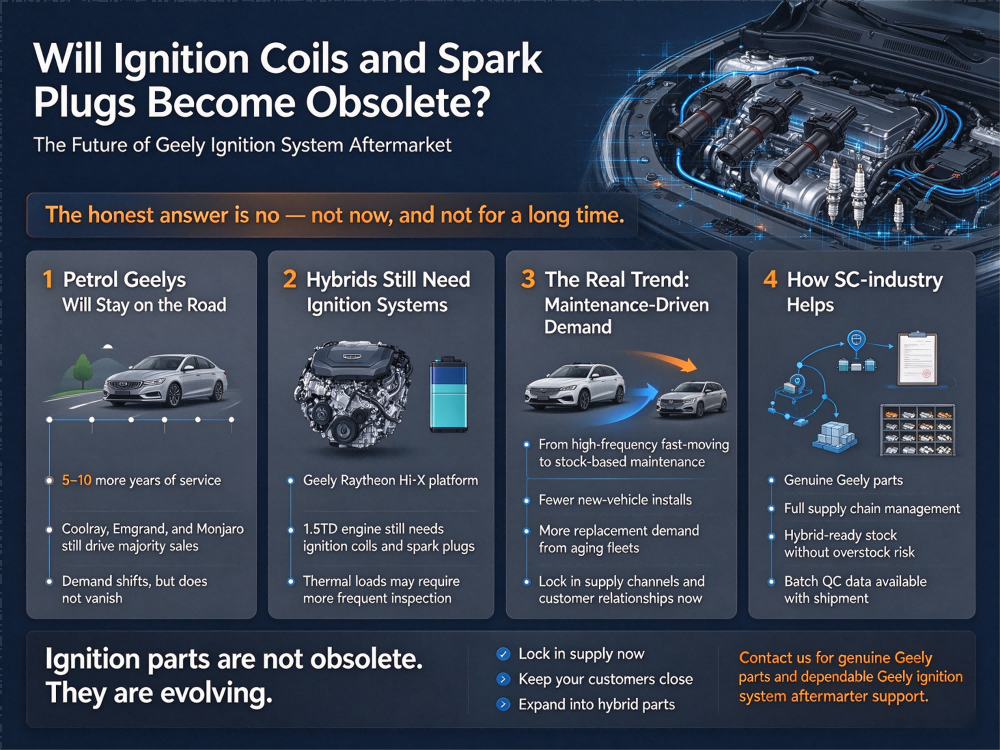
Will Ignition Coils and Spark Plugs Become Obsolete? The Future of Geely Ignition System Aftermarket

Hidden Profit in Geely Switches: The Small Parts That Generate Big Margins for Shops and Distributors