Spark Plug Torque Specs Guide: Why Correct Installation Torque Matters for Engine Performance
author: 01
2026-08-10
Spark Plug Torque Specs Guide: Why Correct Installation Torque Matters for Engine Performance
When it comes to spark plug installation, one of the most overlooked yet critical steps is applying the correct spark plug torque. Whether you are a professional workshop or a maintenance facility, failing to adhere to proper spark plug torque specs can lead to catastrophic engine damage, costly comebacks, and unnecessary warranty disputes. For workshops sourcing premium ignition components, understanding the nuances of spark plug torque is essential for delivering reliable service.
The Critical Balance: Too Loose vs. Too Tight
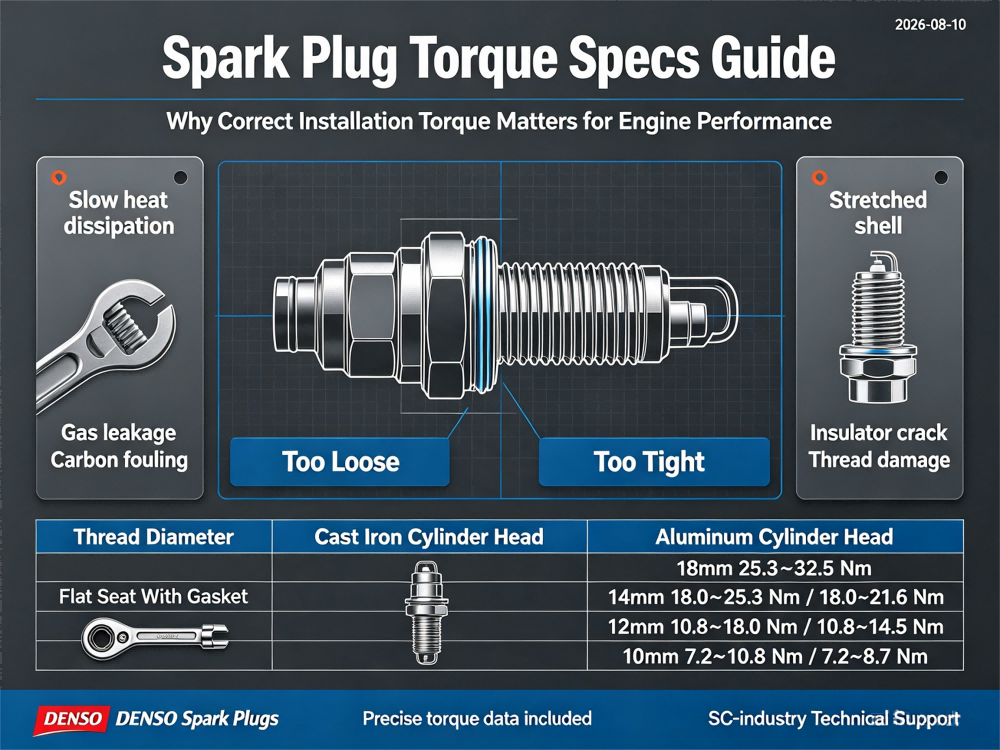
Torque directly affects a spark plug’s ability to transfer heat out of the combustion chamber. If the spark plug torque is insufficient, the plug will not sit flush against the cylinder head. This slows heat dissipation and causes elevated combustion chamber temperatures, often leading to pre-ignition and detonation . Additionally, under-torqued plugs allow combustion gases to leak past the threads, causing carbon fouling that makes future removal difficult and compromises engine efficiency .
Conversely, excessive spark plug torque is equally dangerous. Over-tightening stretches the metal shell, distorting the internal gas seals and potentially causing a hairline fracture in the insulator . This distortion not only breaks the seal but also reduces the plug's ability to dissipate heat, which can lead to pre-ignition and severe engine failure. In aluminum cylinder heads—common in modern engines—over-torquing can easily strip the delicate threads, requiring costly thread repair or even head replacement .
Recommended Spark Plug Torque Specs
To ensure optimal performance and avoid installation errors, industry experts provide specific spark plug torque specs based on cylinder head material and spark plug seat type. Here is a general guide according to NGK and industry standards :
Flat Seat Type (With Gasket)
|
Thread Diameter
|
Cast Iron Cylinder Head (Nm)
|
Aluminum Cylinder Head (Nm)
|
|---|---|---|
|
18mm
|
25.3 ~ 32.5
|
25.3 ~ 32.5
|
|
14mm
|
18.0 ~ 25.3
|
18.0 ~ 21.6
|
|
12mm
|
10.8 ~ 18.0
|
10.8 ~ 14.5
|
|
10mm
|
7.2 ~ 10.8
|
7.2 ~ 8.7
|
Conical Seat Type (Without Gasket)
|
Thread Diameter
|
Cast Iron Cylinder Head (Nm)
|
Aluminum Cylinder Head (Nm)
|
|---|---|---|
|
18mm
|
14.5 ~ 21.6
|
14.5 ~ 21.6
|
|
14mm
|
10.8 ~ 18.0
|
7.2 ~ 14.5
|
|
12mm
|
—
|
7.36 ~ 14.75
|
Mitigating Installation Risks with DENSO
At SC-industry, we understand that even the best spark plugs will fail if installed incorrectly. This is why we specialize in supplying high-quality DENSO spark plugs alongside precise technical documentation. As a leading supplier with robust supply chain management, SC-industryensures that every shipment includes the specific spark plug torque parameters required for the exact DENSO spark plug model you receive .
By providing this critical data with every product, we empower repair shops to eliminate guesswork. Whether you are servicing a classic cast-iron block or a modern aluminum-headed engine, having the exact spark plug torque specs on hand ensures that your technicians avoid the common pitfalls of under or over-tightening.
Trust SC-industry to not only deliver genuine DENSO components but also the technical support necessary to prevent installation failures and protect your workshop from costly liability. For a reliable source of DENSO ignition parts and professional guidance, SC-industry remains your partner in excellence.
How to Find the Correct DENSO Spark Plug Using VIN, OE Number or Competitor Cross Reference
Early Signs of a Clogged Fuel Filter: Diagnostic Tips for Mechanics and Fleet Managers