The Current Development of the Automotive Aftermarket Opportunities in the Era of Car Ownership Growth
China's Automotive Aftermarket Enters Golden Development Phase: Over 366 Million Vehicles in Service, NEV Transition and Digitalization Reshape the Industry
With China’s vehicle ownership officially surpassing 366 million units (as of the end of 2025, according to data from the Ministry of Public Security), the automotive aftermarket has moved from a phase of rapid expansion into a new cycle of stable growth and structural optimization. As a highly dynamic and vital link in the entire automotive industry chain, the aftermarket is now facing unprecedented opportunities. Industry experts point out that — driven by extended vehicle service life, rising consumption upgrade demands, and the rapid penetration of new energy technologies — China‘s automotive aftermarket is forming a new competitive landscape centered on standardization, specialization, and intelligence.
Traditional Fuel Vehicle Aftermarket: Moving Toward Standardization and Specialization
As the stock of fuel vehicles continues to grow, the focus of traditional automotive aftermarket services is shifting from simple repairs toward precision and chain-based operations. Standardized pricing, unified parts supply, and regulated service processes have become the core competencies of leading chain repair brands. Meanwhile, consumers are placing significantly higher demands on service quality, parts transparency, and after-sales protection — a trend that has accelerated the transformation of numerous small independent repair shops into franchise or alliance systems. Industry statistics show that there are now over 11,000 chain repair stores at the thousand-shop level across China, with leading brands such as Sinopec‘s Yijie Auto Care (over 11,000 stores) and Tuhu Auto Care (over 8,000 stores) dominating the market. The chain penetration rate in the automotive service industry has exceeded 10%, signaling the start of a nationwide wave of industry consolidation.
New Energy Vehicle Aftermarket Emerges as a New Growth Driver: Battery Maintenance and Intelligent System Services Take Center Stage
The rapid growth in the number of new energy vehicles (NEVs) is injecting new momentum into the aftermarket. By the end of 2025, China’s NEV fleet reached 43.97 million units, accounting for 12.01% of the country’s total vehicle fleet, with 12.93 million new NEVs registered in 2025 alone — representing 49.38% of all newly registered vehicles that year. Unlike the traditional engine- and transmission-focused maintenance system, the NEV aftermarket focuses more on power battery health testing and maintenance, high-voltage electrical system repairs, battery balancing and thermal management, over-the-air software updates, and intelligent cockpit and autonomous driving system calibration services. In 2025, the NEV maintenance market reached RMB 300 billion, and by 2027, the overall NEV aftermarket is expected to exceed RMB 3.9 trillion, growing at an annual rate of 25%. Multiple leading service providers have begun deploying battery lifecycle utilization, fast-repair dedicated lanes, and mobile service vehicles to address the highly technical, safety-critical, customer-loyalty-focused nature of the NEV aftermarket.
Channel Transformation: Chain Repair Shops, O2O Platforms, and Integrated Service Providers Become Mainstream
Driven by changing consumer habits and digital technologies, the channel structure of the automotive aftermarket is undergoing a fundamental reshaping. While the traditional 4S dealership system still holds the core share of in-warranty services, chain repair brands, O2O home-service platforms, and one-stop integrated car service providers are rapidly seizing market share beyond the warranty period. Consumers can now schedule maintenance, compare prices, submit service reviews, and complete online payments entirely through mobile apps — a fully transparent pricing mechanism and convenient vehicle pickup/delivery service that significantly reduces the consumer’s decision-making burden. At the same time, physical stores are evolving from repair-only functions into comprehensive service hubs covering car washing, detailing, light modifications, insurance agency, and used-vehicle appraisal, forming a "high-frequency services drive low-frequency services, traffic leads to retention" business model.
New Policy Drivers: The Ministry of Commerce Is Promoting the Removal of Restrictive Measures to Further Unlock Aftermarket Potential
It is worth noting that the Ministry of Commerce is actively promoting the removal of restrictive measures in the automotive aftermarket consumption sector. Through the pilot reform of automobile circulation and consumption, the government is supporting qualified cities to deepen reforms, innovate, and pilot new initiatives — a move that is expected to further release consumer potential in the aftermarket. With both policy dividends and consumption upgrades reinforcing each other, the industry is poised for long-term, sustained growth.
Upgrading Consumer Demands: Transparency, Convenience, and Full-Lifecycle Services Become Core Keywords
Consumers today have expectations of the automotive aftermarket that go far beyond simply “getting the car fixed.” Industry surveys show that over 70% of consumers rank transparent service pricing, traceable repair progress, and traceable parts sources as their top three considerations when choosing a service provider. Meanwhile, convenience-enhancing measures such as doorstep pickup and delivery, nighttime repairs, and courtesy car services are increasingly becoming key tools for differentiation in a competitive marketplace. In response, more aftermarket companies are building full lifecycle automotive service systems — covering everything from the first maintenance after new car delivery to insurance claims, accident repairs, cosmetic modifications, and pre-trade-in appraisals — supported by a “one car, one file, fully traceable” customer management system.
Four Major Trends Leading the Future: Digitalization, Chain Operations, NEV-Dedicated Services, and Full-Lifecycle Car Management
Looking ahead to the 15th Five-Year Plan period, China’s automotive aftermarket will accelerate its evolution along four main paths:
-
Digitalized Operations: SaaS-based systems connect store management, supply chain procurement, customer relations, and marketing data, enabling precision marketing, smart inventory management, and remote diagnostics. Technologies such as AI customer service bots, AR-assisted repairs, and remote flashing are gradually being deployed.
-
Chain-Based Networks: Leading brands expand rapidly through direct ownership, franchising, and licensing models, forming regional and even national service networks. Greater scale gives rise to stronger bargaining power and unified quality control.
-
NEV-Dedicated Services: Independent testing tools, repair standards, and technician certification systems are being developed for the three-electric system (battery, motor, and electronic control). Battery health assessments, range restoration services, and charging pile maintenance are becoming standard service offerings.
-
Full-Lifecycle Car Services: From auto financing and insurance agency through in-use maintenance, repairs, and detailing, to used-car valuation and repurchase recommendations — a closed loop that maximizes long-term customer value.
Enterprise Opportunities: A Triple Blue Ocean in Parts Supply, Maintenance Services, and Operational Management
As the industry undergoes structural upgrades, three types of enterprises stand to benefit significantly: parts suppliers can leverage data platforms for precision stocking and reverse logistics, reducing inventory turnover days; maintenance service providers gain differentiation through branded chain systems and NEV-specific certifications; and operations management platforms offer stores one-stop solutions for personnel training, technical support, and traffic distribution. China’s automotive aftermarket size is projected to surpass RMB 2.8 trillion by 2030, with the NEV aftermarket expected to exceed RMB 3.9 trillion by 2027.
As technology continues to iterate and consumer habits further evolve, China’s automotive aftermarket is leaving behind its fragmented, coarse-grained past and entering a new era driven by data, standardized services, and full vehicle lifecycle coverage. For enterprises, seizing the two engines of NEV transformation and digitalized chain operations will be the key to winning the next decade of competition.
China Auto Parts Export Market: Trends, Opportunities, and Strategic Insights for Global Distributors
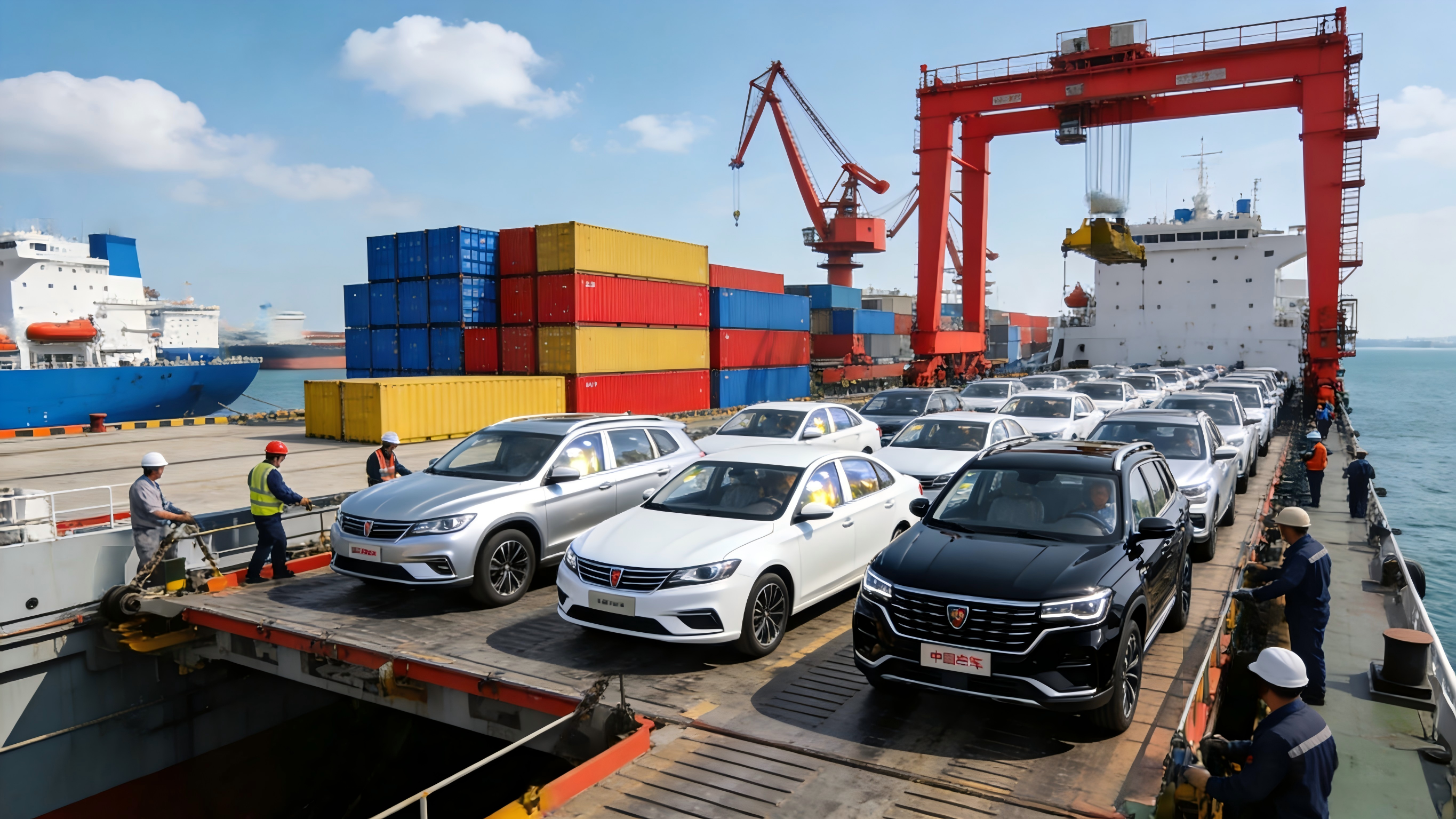
New Features and Trends of Chinese Enterprises Going Global