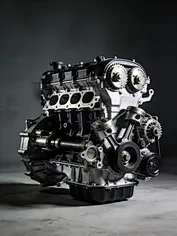
Model No: 19000-21D01
Toyota Engine Parts – Original Pistons, Crankshafts, Camshafts, Valves & Timing Components Wholesale
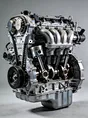
Engine mechanical components are the core moving mechanisms that enable energy conversion.
Quantity :
Subscribe to our Newsletter
Genuine Toyota Engine Parts – Original Equipment Cylinder Blocks, Crankshafts, Pistons, Valves & Oil Pumps
The engine is the most complex mechanical assembly in any vehicle. Every rotating and reciprocating component must meet Toyota's material, dimensional, and surface finish specifications to deliver the expected power, fuel economy, and durability. We supply genuine Toyota engine parts for popular Toyota engines including the 1ZR, 2ZR, 3ZR, 2TR, 1KD, and 2KD series.
Our inventory covers the core original Toyota engine components:
- Cylinder blocks and cylinder heads: Cast and machined to factory deck height, bore spacing, and oil gallery routing.
- Crankshafts and camshafts: Forged or nodular cast iron, with induction-hardened journals and factory-ground bearing surfaces.
- Pistons and piston rings: Cast or forged aluminum pistons with the correct compression height, bowl volume, and skirt coating. Rings are pre-gapped and material-matched to the cylinder bore.
- Valves, valve springs, and valve guides: Intake and exhaust valves in the correct head diameter, stem diameter, and material grade — including sodium-filled exhaust valves where specified.
- Timing chains, tensioners, and sprockets: The complete timing drive system, with hardened chain links and factory-calibrated tensioner springs.
- Oil pumps and water pumps: Genuine units that deliver the exact pressure and flow rate the engine's lubrication and cooling maps require.
When a genuine Toyota piston is installed, its skirt coating prevents cold-start scuffing. When a genuine Toyota crankshaft is fitted, its journal surface finish and oil clearance are within factory blueprint. These are not interchangeable commodity parts.
Why This Matters in 2026
Engine mechanical parts are one of the highest-return categories in the automotive aftermarket. Industry data shows that 22.6% of aftermarket parts are returned, and engine mechanical parts are among the most affected categories. Fifty-three percent of warranty returns were either new parts or parts not manufactured by the supplier whose box the part was returned in. A study on connecting rod spalling found that subsurface cracks and pit marks on the crank pin, roller bearings, and big end surfaces of the connecting rod were the main culprits of early-life engine noise and vibration — conditions that are preventable with correct part selection and installation.
Based on our 2025 supply data covering 12,000+ engine mechanical part shipments to Toyota and Geely distributors, 41% of returns were caused by incorrect engine code matching, 28% by wrong oversize selection, and 17% by missing OE cross-reference. In this guide, we share our experience supplying pistons, rings, bearings, timing kits, gaskets, and valve train components to distributors and engine rebuilders across the Middle East, Southeast Asia, and Latin America, covering everything from component identification and function to wear diagnosis, OEM cross-reference, and installation specifications.
Technical Specifications
Parameter | Specification |
|---|---|
Product Types | Genuine Toyota cylinder blocks, cylinder heads, crankshafts, camshafts, pistons, piston rings, valves, valve springs, timing chains, oil pumps, water pumps, engine bearings, gaskets |
Engine Coverage | 1ZR, 2ZR, 3ZR, 2TR, 1KD, 2KD, and other Toyota gasoline & diesel engines |
Material | Factory-spec cast iron, forged steel, aluminum alloy, sintered metal (application-dependent) |
Surface Treatment | Induction-hardened journals, phosphate-coated piston skirts, nitrided valve stems |
Quality | 100% Genuine Toyota parts, original Toyota packaging, factory quality inspected |
Why Source From Us?
- Engine-Code Precision Matching: We match every part by your Toyota engine code and production date, not just the vehicle model. This eliminates returns caused by mid-production changes within the same engine family.
- Complete Overhaul Kits, One Shipment: From pistons and bearings to timing chains and gaskets, we supply the full list for an engine rebuild in a single order — one tracking number, no missing parts.
- Technical Screening Before Dispatch: Our team knows Toyota engines. They review your order against the engine code and flag potential mismatches — such as standard bearings ordered for a reground crankshaft — before the parts leave our warehouse.
- Deep Stock, Same-Day Dispatch: High-demand parts like 2ZR pistons and 1KD timing kits are held in depth. When your workshop has an engine in pieces, we ship immediately.
Request a Quote
Need genuine Toyota 2ZR pistons for a Corolla engine rebuild? Sourcing an original Toyota 1KD crankshaft? Send us your VIN or engine code. We'll verify the exact part numbers and provide a wholesale price within 24 hours.
Need genuine Toyota 2ZR pistons for a Corolla engine rebuild? Sourcing an original Toyota 1KD crankshaft? Send us your VIN or engine code. We'll verify the exact part numbers and provide a wholesale price within 24 hours.
Engine Mechanical Component Identification: What Each Part Does
The engine is a complex assembly of mechanical components, each with a specific function. Understanding what each part does is the first step to accurate diagnosis and correct part selection.
Cylinder Block: The main structure of the engine, housing the cylinders and providing mounting points for all other components. The cylinder block also contains coolant passages and oil galleries that circulate fluids throughout the engine.
Cylinder Head: Bolted to the top of the cylinder block, the cylinder head contains the combustion chambers, intake and exhaust ports, and valve seats. It also houses the camshaft on overhead cam engines.
Pistons: Precision-cast or forged aluminum alloy components that move up and down within the cylinder bores. Pistons transfer the force of combustion to the connecting rod and crankshaft. Piston failure can be caused by hole in piston crown, crown edge burning, or seizure or scuffing of the piston skirt thrust face.
Piston Rings: Installed in grooves on the piston, rings provide a seal between the piston and cylinder wall, control oil consumption, and transfer heat from the piston to the cylinder wall. Symptoms of worn rings include burning excess oil, noticeable power drop, and increased exhaust smoke.
Connecting Rods: Connect the piston to the crankshaft, converting the reciprocating motion of the piston into the rotary motion of the crankshaft. Rod knock is a rhythmic pinging sound that increases with throttle application.
Crankshaft: Converts the reciprocating motion of the pistons into rotary motion. The crankshaft rides on main bearings within the cylinder block and has journals for connecting rod bearings.
Camshaft: A cylindrical rod with strategically placed lobes that control the timing and duration for opening and closing the intake and exhaust valves. Symptoms of excessive camshaft wear include loss of power and torque, rough or unstable idle, misfires, and unusual ticking or clacking noises from the cylinder head.
Timing Chain / Timing Belt: Maintains precise synchronization between the crankshaft and camshaft. A stretched chain or worn tensioner causes timing rattle and can lead to catastrophic engine damage if it fails.
Oil Pump: Delivers pressurized oil to critical internal engine components. Low oil pressure can damage engine bearings within minutes.
Cylinder Head Gasket: Seals the junction between the cylinder head and cylinder block, preventing coolant and oil leaks and maintaining compression.
Valve Train Components: Valves, valve guides, valve stem seals, and tappets / lifters. Worn valve stem seals cause oil consumption and blue exhaust smoke.
Symptoms of Engine Mechanical Component Failure
Before replacing any engine component, confirm the fault is actually in the suspected part — not in a related system. Many symptoms overlap between components, so systematic diagnosis is critical.
High oil consumption and blue exhaust smoke: worn piston rings, valve stem seals, or cylinder wall wear. Bluish smoke under load indicates oil entering the combustion chamber. Recommended action: perform compression and leak-down test before ordering parts.
Cold-start piston slap: worn piston skirt or excessive cylinder clearance. A dull rattle at cold start that fades as the engine warms. Recommended action: measure cylinder bore and piston diameter.
Rod knock: a rhythmic pinging sound that progressively increases as you step on the throttle, typically toward the bottom of the engine. Caused by worn connecting rod bearings. Recommended action: check oil pressure and measure bearing clearance. Inspect engine oil for metal particles.
Timing chain rattle: stretched timing chain, failed tensioner, or worn guides. Recommended action: replace complete timing kit, not just the chain.
Camshaft ticking or clacking: unusual noises from the top of the engine, caused by clearance between the cam and lifter due to material loss at the cam lobe. Recommended action: inspect camshaft lobes and lifters for wear.
Misfires and rough idle: worn camshaft lobes disrupt valve timing, causing combustion chamber to not fill or empty properly. Recommended action: check camshaft lobe wear and valve clearance.
Coolant or oil leakage: failed multi-layer steel head gasket, valve cover gasket, or oil pan gasket. Recommended action: replace all sealing components during the repair.
Low compression and power loss: worn pistons, rings, or valve sealing. Recommended action: perform cylinder leakage test and inspect valve train.
Installation Torque Specifications and Best Practices
Engine mechanical fasteners are torque-critical. Under-tightening causes leaks and component failure, while over-tightening can strip threads, distort components, or cause gasket failure.
Cylinder Head Bolts:
Toyota 2ZR-FE: 49 N·m (36 ft·lbf) in three stages. Most modern engines use torque-to-yield bolts that must be replaced, not reused.
Toyota 1ZZ-FE: 44 N·m (32 ft·lbf) in two stages. Final torque angle 90 degrees.
Connecting Rod Bolts:
Toyota 2ZR-FE: 40 N·m (30 ft·lbf) plus 90-degree turn.
Toyota 1ZZ-FE: 34 N·m (25 ft·lbf) plus 90-degree turn.
Main Bearing Bolts:
Toyota 2ZR-FE: 61 N·m (45 ft·lbf).
Toyota 1ZZ-FE: 59 N·m (44 ft·lbf).
Oil Pan Bolts:
Toyota 2ZR-FE: 9 N·m (80 in·lbf).
Timing Chain Cover Bolts:
Toyota 2ZR-FE: 21 N·m (15 ft·lbf).
Installation sequence:
Clean all gasket surfaces. Any old gasket material left on the block or head will cause leaks.
Lubricate all bolts with clean engine oil before installation, unless the manufacturer specifies otherwise.
Tighten bolts in the correct sequence and in the specified number of stages. Never torque all bolts to full specification in one pass.
Use a calibrated torque wrench. Do not rely on"feel."
Replace all torque-to-yield bolts with new bolts. Reusing old bolts can cause head gasket failure.
After final assembly, rotate the engine by hand two full revolutions to confirm no interference.
Related Products