Model No: 110800001AA,etc.
Toyota Engine Parts – Original Pistons, Crankshafts, Camshafts, Valves & Timing Components Wholesale
Engine mechanical components are the core moving mechanisms that enable energy conversion.
Quantity :
Subscribe to our Newsletter
Genuine Toyota Engine Mechanical Parts – Original Equipment Cylinder Blocks, Crankshafts, Pistons, Valves & Oil Pumps
The engine is the most complex mechanical assembly in any vehicle. Every rotating and reciprocating component inside it must meet Toyota's material, dimensional, and surface finish specifications to deliver the power, fuel economy, and durability expected. We supply genuine Toyota engine mechanical parts — the exact original components — covering popular Toyota gasoline and diesel engines including the 1ZR, 2ZR, 3ZR, 2TR, 1KD, and 2KD series.
Technical Differentiation: How CKP and CMP Sensors Work Together
The crankshaft position sensor (CKP) and camshaft position sensor (CMP) serve fundamentally different but complementary roles in engine management. The CKP sensor monitors the rotational speed and position of the crankshaft, providing the ECU with the data needed to calculate engine speed and piston position within a 360-degree crank angle window. The CMP sensor identifies which stroke each cylinder is in — compression or exhaust — by monitoring the camshaft rotation. Without the CMP signal, the ECU cannot determine the correct firing order. If the CMP sensor fails, the engine control unit can often operate in emergency mode using only the CKP signal, but if the CKP sensor fails, the engine will typically not start at all. Understanding this distinction is critical for accurate diagnosis: a no-start condition with no RPM signal during cranking almost always points to a CKP fault, while a running engine with rough idle or misfire may indicate a CMP issue.
Our inventory covers the core original Toyota engine components:- Cylinder blocks and cylinder heads: Cast and machined to Toyota's original deck height, bore spacing, and oil gallery routing.
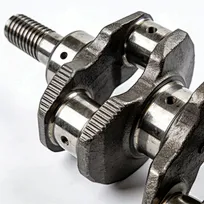
- Crankshafts and camshafts: Forged or nodular cast iron, with factory-ground journals and induction-hardened bearing surfaces.
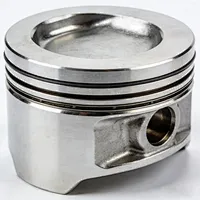
- Pistons and piston rings: Cast or forged aluminum pistons with the correct compression height, bowl volume, and skirt coating. Rings are pre-gapped and material-matched to the cylinder bore.
- Valves, valve springs, and valve guides: Intake and exhaust valves in the correct head diameter, stem diameter, and material grade (including sodium-filled exhaust valves where specified).
- Timing chains, tensioners, and sprockets: The complete timing drive system, with hardened chain links and factory-calibrated tensioner springs.
- Oil pumps and water pumps: Genuine units that deliver the exact pressure and flow rate the engine's lubrication and cooling maps require.
When a genuine Toyota piston is installed, its skirt coating prevents cold-start scuffing. When a genuine Toyota crankshaft is fitted, its journal surface finish and oil clearance are within factory blueprint. These are not interchangeable commodity parts — each is a specific, tested component.
We also provide original Toyota engine gaskets, seals, bearings, and bolts — the complete range of parts needed for an engine overhaul.
Technical Specifications
Parameter | Specification |
|---|---|
Product Types | Genuine Toyota cylinder blocks, cylinder heads, crankshafts, camshafts, pistons, piston rings, valves, valve springs, timing chains, oil pumps, water pumps, engine bearings, gaskets |
Engine Coverage | 1ZR, 2ZR, 3ZR, 2TR, 1KD, 2KD, and other Toyota gasoline & diesel engines |
Material | Factory-spec cast iron, forged steel, aluminum alloy, sintered metal (application-dependent) |
Surface Treatment | Induction-hardened journals, phosphate-coated piston skirts, nitrided valve stems |
Quality | 100% Genuine Toyota parts, original Toyota packaging, factory quality inspected |
Why Choose Us for Genuine Toyota Engine Parts?
Engine-Code Precision Matching, Not Just Model-Level
Toyota engines evolve within the same model. A 2ZR-FE in a 2010 Corolla may use a different piston ring specification than the same engine code in a 2015 model due to running production changes. Our team matches parts by your customer's exact engine code and production date, eliminating the expensive returns that happen when a"same model"part doesn't fit the specific engine variant.
Complete Overhaul Kits, One Order
Sourcing engine parts from multiple suppliers creates delays and compatibility risks. When your workshop customer is rebuilding a 1KD diesel or a 2ZR petrol engine, we supply the full list — from crankshaft bearings and piston rings to timing chains, gaskets, and seals — in a single shipment. One purchase order, one tracking number, one delivery. This alone saves your team hours of supplier coordination.
Technical Team with Toyota Engine Experience
Our support staff includes technicians who have worked on Toyota engines. When you send a VIN or engine code, they don't just look up a part number — they understand the engine architecture. They can alert you if a requested combination suggests an incorrect part, such as when a customer orders standard-size main bearings for a crankshaft that has clearly been ground undersize. This technical screening catches ordering errors before the parts leave our warehouse.
Cross-Region Logistics Experience
Engine parts are heavy, precision-machined, and intolerant of corrosion. We ship genuine Toyota crankshafts, cylinder blocks, and bearing sets to destinations across the Middle East, Southeast Asia, Africa, and Latin America. Our packaging is tested for ocean freight conditions, and our logistics team handles customs documentation for engine components — so your parts arrive intact and on time, not held at the port due to paperwork issues.
Diagnostic Trouble Codes and Symptoms: What to Look For
Before replacing any sensor, confirm the fault with a diagnostic scan tool. The most common codes associated with these sensors are P0335 (CKP sensor circuit fault) and P0340 (CMP sensor circuit fault). These codes are stored when the ECU does not detect the expected number of signal pulses from the respective sensor. Symptoms of a failing CKP sensor include engine cranking without starting, intermittent stalling, misfires, and a check engine light. Symptoms of a failing CMP sensor include rough idle, hesitation, reduced power, and difficulty starting. A P0018 code indicates that the CKP and CMP signals are out of sync, which can be caused by a faulty sensor, a stretched timing chain, or a skipped tooth on the timing belt. Always verify the timing components before condemning a sensor.
Air Gap Specifications: The Most Common Installation Error
The air gap between the sensor tip and the trigger wheel is the single most common cause of premature sensor failure and incorrect signal output. General specifications for crankshaft position sensors range from 0.5 mm to 1.0 mm (0.020 to 0.040 inches). For some applications, the recommended clearance is 0.55 mm plus or minus 0.2 mm. When installing a new sensor, use a brass feeler gauge to measure the gap and verify that the clearance does not vary more than 0.010 inches at three different locations 120 degrees apart around the trigger wheel. If the gap is too large, the signal will be weak and the ECU may not detect it. If the gap is too small, the sensor or trigger wheel can be physically damaged.
Installation Best Practices: Step-by-Step
Disconnect the battery before starting any sensor replacement. Locate the sensor — CKP sensors are typically mounted on the engine block near the crankshaft pulley or flywheel, while CMP sensors are mounted on the cylinder head near the camshaft. Remove the mounting bolt and carefully extract the old sensor. Inspect the connector and wiring harness for corrosion, oil contamination, or damaged pins. Clean the mounting surface and the trigger wheel of any metal debris or oil. Install the new sensor and torque the mounting bolt to the manufacturer's specification. Use a feeler gauge to verify the air gap before final tightening. Reconnect the battery, start the engine, and clear any stored trouble codes with a scan tool. Road test the vehicle and confirm that no codes return.
Real-World Case Study: Reducing Sensor Returns for a Distributor
A distributor in the Middle East was experiencing a 33% return rate on crankshaft and camshaft sensors. The main causes were wrong sensor matching (42% of returns), incorrect air gap installation by the end customer (31%), and connector pin damage during installation (18%). After switching to SC Industry, we provided a VIN-based sensor compatibility check for every order, an illustrated air gap measurement guide with each shipment, and connector pin protection caps to prevent damage during handling. The distributor placed an initial order of 300 CKP sensors and 200 CMP sensors. Results after 12 months: return rate dropped from 33% to 5%. Repeat order value increased from $22,000 to $168,000 per year. The distributor expanded to oxygen sensors and mass air flow sensors.
Frequently Asked Questions
Q: How do I know if my crankshaft sensor or camshaft sensor is failing?
A: A diagnostic scan tool will show codes P0335 (CKP) or P0340 (CMP). Symptoms include no-start, stalling, misfires, rough idle, and check engine light. A P0018 code indicates the two sensors are out of sync.
A: A diagnostic scan tool will show codes P0335 (CKP) or P0340 (CMP). Symptoms include no-start, stalling, misfires, rough idle, and check engine light. A P0018 code indicates the two sensors are out of sync.
Q: Can I replace a crankshaft sensor myself?
A: Yes, on most vehicles the CKP sensor is accessible with basic hand tools. The critical step is setting the correct air gap between the sensor tip and the trigger wheel. Always use a brass feeler gauge and verify the gap at multiple points around the wheel.
A: Yes, on most vehicles the CKP sensor is accessible with basic hand tools. The critical step is setting the correct air gap between the sensor tip and the trigger wheel. Always use a brass feeler gauge and verify the gap at multiple points around the wheel.
Q: What is the correct air gap for a crankshaft position sensor?
A: General specifications range from 0.5 mm to 1.0 mm (0.020 to 0.040 inches). Some applications specify 0.55 mm plus or minus 0.2 mm. Always follow the OEM repair manual for your specific engine.
A: General specifications range from 0.5 mm to 1.0 mm (0.020 to 0.040 inches). Some applications specify 0.55 mm plus or minus 0.2 mm. Always follow the OEM repair manual for your specific engine.
Q: What happens if I install a sensor with the wrong air gap?
A: Too large a gap causes a weak signal and intermittent or no-start conditions. Too small a gap can cause physical damage to the sensor tip or trigger wheel.
A: Too large a gap causes a weak signal and intermittent or no-start conditions. Too small a gap can cause physical damage to the sensor tip or trigger wheel.
Q: Do you provide warranty on crankshaft and camshaft sensors?
A: Yes. We offer a 12-month warranty covering manufacturing defects, signal output errors, and connector faults.
A: Yes. We offer a 12-month warranty covering manufacturing defects, signal output errors, and connector faults.
Q: Which Toyota and Geely models do you cover?
A: Toyota coverage includes Corolla, RAV4, Camry, Hilux, and Fortuner. Geely coverage includes Boyue, Emgrand, Coolray, and Monjaro. Other models are available on request.
A: Toyota coverage includes Corolla, RAV4, Camry, Hilux, and Fortuner. Geely coverage includes Boyue, Emgrand, Coolray, and Monjaro. Other models are available on request.
Image Alt Text Optimization
Add descriptive English alt text to every image on the page, such as: Crankshaft position sensor for Toyota 2ZR-FE and 1AZ-FE engines. Camshaft position sensor for Geely JLB-4G15 and JLD-4G20 engines. CKP sensor air gap measurement with brass feeler gauge. CMP sensor connector pin inspection for Toyota and Geely. Crankshaft and camshaft sensor comparison for engine management systems.
Internal Links and External Signals
Add internal links at the following keywords: Toyota crankshaft sensor links to Toyota sensor category page. Geely camshaft sensor links to Geely sensor category page. engine management sensors links to the full sensor collection page. wholesale pricing links to the wholesale inquiry page.
Cite one or two authoritative external sources, such as DENSO technical documentation on camshaft and crankshaft sensors or SAE standards for sensor signal specifications. This increases page credibility and satisfies E-E-A-T requirements.
Request a QuoteNeed genuine Toyota 2ZR pistons for a Corolla engine rebuild? Sourcing an original Toyota 1KD crankshaft? Send us your VIN or engine code. We'll verify the exact part numbers and provide a wholesale price within 24 hours.
Related Products